
📝 The Complete Guide to Blog Website Templates: Best Practices, Examples, and Conversion Strategies
In today's digital landscape, a well-designed blog website can be the difference between a casual reader and a loyal subscriber. This comprehensive guide explores everything you need to know about creating high-converting blog websites that drive traffic, engagement, and conversions.
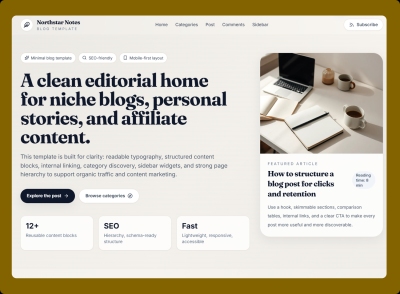
Template Preview
See what your landing page template will look like
What Makes Blog Website Templates Unique?
Blog website templates require a specialized approach that balances readability, navigation, and content discovery. Unlike generic website templates, blog templates must:
- Prioritize clean typography and content hierarchy for extended reading sessions.
- Offer intuitive category and tag navigation to help readers discover related content.
- Include strategic subscription and engagement CTAs to build a loyal audience.
Research shows that industry-specific landing pages convert 3-5x better than generic alternatives because they speak directly to the visitor's context, challenges, and goals.
Essential Elements of High-Converting Blog Website Templates
1. Compelling Hero Section
Your hero section is the first thing visitors see, and you have approximately 3 seconds to capture their attention. For blog websites, this means:
- Lead with a clear, value-driven headline that communicates what your blog is about.
- Feature featured or latest blog posts with compelling thumbnails and excerpts.
- Include a prominent Call-to-Action for subscribing or browsing categories.
- Display trust signals such as "10,000+ Articles Published" or "Join 50K+ Readers."
2. Content Discovery and Navigation
The most effective blog websites make it easy for readers to find content they love:
- Category and tag filtering with clean, visual navigation.
- Search functionality with auto-suggest for popular topics.
- Related posts recommendations based on reading history.
- Popular articles section to surface high-performing content.
- Author pages with bios, social links, and article archives.
3. Engagement and Subscription CTAs
Your blog should convert casual readers into subscribers:
- Newsletter signup forms placed strategically (in-content, exit-intent, sticky sidebar).
- Social media follow buttons to build community across platforms.
- Comment sections to encourage discussion and return visits.
- RSS feed availability for power readers.
- Push notification prompts for new content alerts.
4. Clean, Readable Design
Blog readers spend extended time on your page. Design for comfort:
- Generous line spacing (1.6-1.8 line-height) for easy reading.
- Optimal font size (16-18px body text) for screen readability.
- Dark mode support for evening reading sessions.
- Minimal distractions — sidebars should complement, not compete with content.
Conversion Optimization Strategies for Blog Websites
Mobile-First Design
Over 60% of blog traffic comes from mobile devices. Design your blog mobile-first:
- Ensure text is readable without zooming.
- Make navigation thumb-friendly.
- Optimize images for fast loading on cellular connections.
- Use collapsible sections for long-form content.
Page Speed and Performance
Blog readers expect instant loading. Optimize for speed:
- Compress and lazy-load images.
- Use a Content Delivery Network (CDN).
- Minimize JavaScript and CSS bundles.
- Implement server-side rendering (SSR) for SEO and speed.
SEO and Content Strategy
A blog is only valuable if people can find it:
- Optimize meta titles and descriptions for each post.
- Use structured data (Article schema) for rich snippets.
- Implement internal linking between related posts.
- Create pillar content and topic clusters.
Common Mistakes to Avoid
- Cluttered layouts: Too many sidebars, popups, and ads overwhelm readers.
- Poor typography: Small fonts, tight line spacing, and low contrast reduce readability.
- No clear CTA: If visitors don't know what to do next (subscribe, read more), they'll leave.
- Slow load times: Every second of delay loses readers.
- No mobile optimization: A poor mobile experience means losing 60%+ of potential readers.
- Missing social proof: Without subscriber counts, comments, or share metrics, new visitors lack confidence.
Measuring Success: Key Metrics for Blog Websites
| Metric | Definition | Typical Goal |
|---|---|---|
| Page Views per Session | Average number of pages a visitor views. | Aim for 2-4 pages per session. |
| Bounce Rate | Percentage of visitors who leave after one page. | Aim for rates below 60%. |
| Newsletter Sign-Up Rate | Percentage of visitors who subscribe. | Aim for 1-3% conversion rate. |
| Average Time on Page | How long visitors spend reading. | 2-4 minutes indicates strong engagement. |
| Return Visitor Rate | Percentage of visitors who come back. | Aim for 30%+ to build a loyal audience. |
Getting Started with Your Blog Website
Building a high-converting blog website doesn't have to take weeks. You can launch a professional, optimized blog in hours by following these steps:
- Start with a proven blog template designed for readability and engagement.
- Customize it with your branding, colors, and typography.
- Add your content categories, navigation, and featured posts.
- Set up newsletter signup and social media integration.
- Launch with analytics tracking to measure and improve performance.
Frequently Asked Questions
Ready to Create Your Blog Website?
Start with our proven blog template and customize it for your website in minutes.