Built only for conversion
A short hero, a form, and one button. Perfect for a paid ad, but there is almost nothing for a crawler to index and no reason for the page to rank organically.
Make a single, conversion-focused page rank in organic search. This guide covers the on-page, content, and technical work that actually moves rankings.
Build an SEO landing page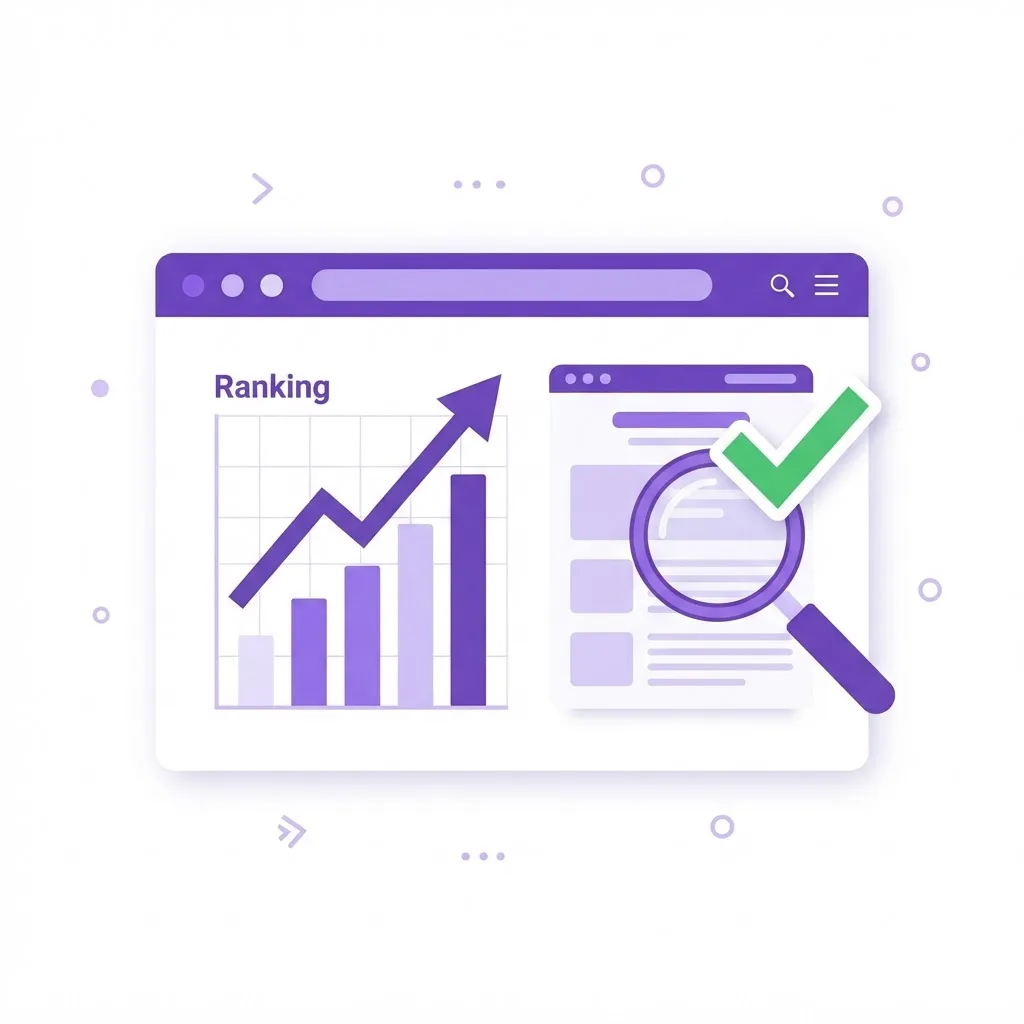
Most landing pages are built to convert paid traffic, so they are short, visual, and light on text. Search engines need something to read. Landing page SEO keeps the conversion focus while adding the context, structure, and speed that ranking requires.
A short hero, a form, and one button. Perfect for a paid ad, but there is almost nothing for a crawler to index and no reason for the page to rank organically.
The same clear call to action, plus content that answers the query, a logical heading structure, and fast, crawlable markup. One page that earns organic traffic and turns it into action.
The goal is not to bolt a wall of text onto a form. Answer the searcher's question directly, prove you are a credible result, and make the next step obvious. When intent, content, and technical health line up, one page can rank and convert at the same time.
These are the signals you control directly on the page: a clear heading structure, accurate title and meta tags, content that matches search intent, and descriptive internal links. Get them right before spending effort on anything else.
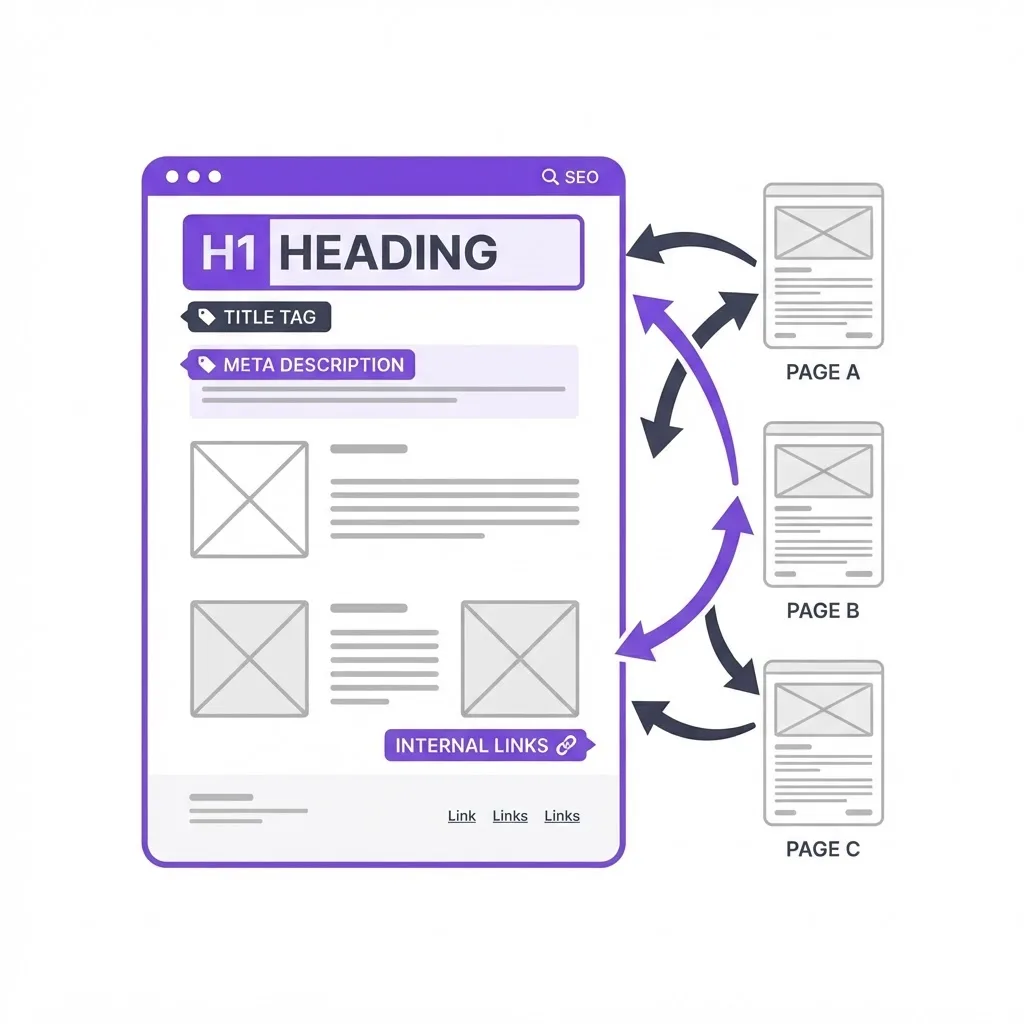
Use a single H1 that states the page's promise and contains your primary keyword. Break the body into H2s and H3s so both readers and crawlers can follow the structure at a glance.
Write a title under 60 characters and a description under 160 that describe the offer accurately. They rarely change rankings directly, but they drive the click-through that search engines reward.
Before writing a word, check what already ranks for your term. If Google shows how-to guides, a bare signup form will not compete. Give the query the format and depth it expects.
Link to and from related pages using natural anchor text, and keep the URL short and readable, for example /seo-for-landing-pages. This spreads authority and helps crawlers understand context.
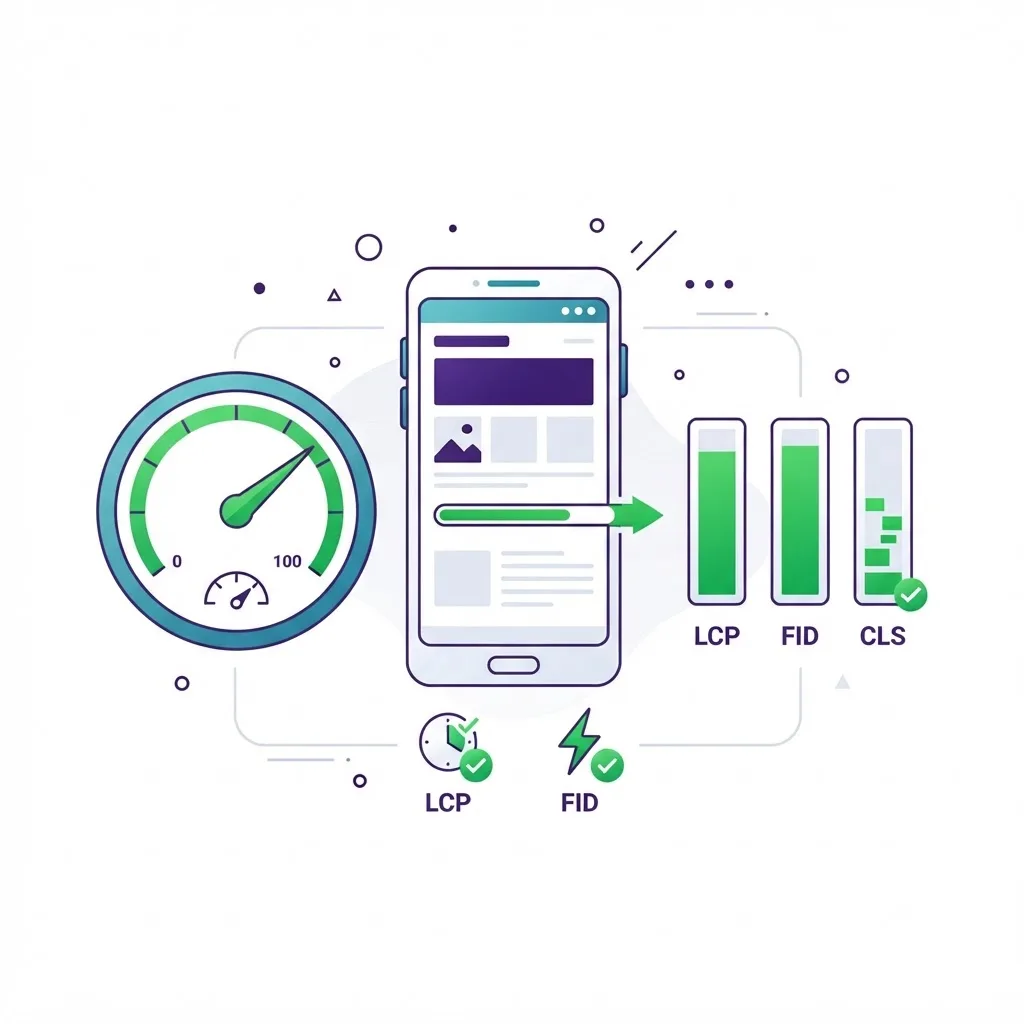
A page can have perfect copy and still fail to rank if it is slow, hard to crawl, or invisible to structured-data parsers. Core Web Vitals, mobile-first rendering, and valid schema are where many landing pages quietly lose ground.
Largest Contentful Paint, Interaction to Next Paint, and Cumulative Layout Shift are real ranking signals. Compress hero images, avoid layout shift from late-loading elements, and defer non-critical scripts.
Google indexes the mobile version first. Ensure tap targets, readable font sizes, and semantic HTML with alt text — accessibility and crawlability improve together.
Add relevant schema such as FAQPage, Product, or BreadcrumbList so your page is eligible for rich results. Validate it and keep it consistent with what visitors actually see.
You do not have to hand-code any of this. Our AI landing page builder and free SEO tools handle the structure, schema, and technical groundwork so you can focus on the offer.
Generate a full landing page with a single H1, structured headings, and clean, fast markup that is ready to rank out of the box.
Browse use casesAdd a genuinely useful FAQ section with valid FAQPage structured data, making your page eligible for rich results in search.
Open the toolCreate an XML sitemap so Google and Bing discover and crawl every landing page you publish, faster and more reliably.
Open the toolSEO for landing pages is the process of optimizing a focused, conversion-oriented page so it ranks in organic search. It combines keyword and intent research, on-page elements like titles and headings, fast technical performance, and enough genuine content to answer the query.
A blog post usually targets informational queries and can be long. An SEO landing page balances ranking with conversion: it still needs substantive, indexable content, but it guides the visitor toward a single action. The challenge is adding enough context for search engines without burying the call to action.
Yes. A landing page can rank on its own if it matches search intent, loads quickly, has clear on-page signals, and earns relevant internal and external links. A supporting blog helps by building topical authority and internal links, but it is not a requirement.
For a new page, expect a few weeks to several months depending on competition, your site's existing authority, and how well the page matches intent. Technical fixes and better intent alignment often show results faster than link building.
Focus each page on one primary keyword and a small cluster of closely related terms. Spreading several unrelated keywords across one page dilutes relevance, while separate pages for each intent tend to rank better and convert more clearly.
Capture buyers who need a ready-to-use bill of sale they can download instantly.
ToolsReach makers searching for a drag-and-drop way to build forms without coding.
TemplatesServe users looking for ready-made form templates they can customize fast.
Choose a use case above or start from scratch with our AI-powered builder. Create professional, high-converting landing pages in minutes.
Free to start · 100+ templates available